
Looking for Non-Surgical Knee Pain Relief? Here Are 10 Things You Should Know

Living with ongoing knee pain can make everyday activities feel harder than they should. Walking, using the stairs, exercising or spending time with family may all require more thought.
But knee pain does not automatically mean you need surgery.
There are several non-surgical knee pain relief options to explore, particularly if you have tried standard care and are still looking for better ways to move. The right approach depends on your symptoms, diagnosis, goals and overall health.
Here are 10 important things to know.
1. Knee pain does not always mean knee replacement is your only option
Knee replacement surgery can help some people with severe osteoarthritis. However, it is a major procedure involving recovery, rehabilitation and potential risks.
Before surgery is considered, healthcare professionals will usually explore non-surgical treatments. These may include exercise, weight management, pain relief, physiotherapy, injections and supportive devices.
For some people, these approaches provide enough relief to continue with daily life. For others, they may help delay surgery while they consider their options.
You have options: and understanding them is the first step.
Read more about treatment options for knee osteoarthritis on the NHS website.
2. Find out what may be contributing to your pain
Knee pain can have several causes. Osteoarthritis is common, but pain may also be linked to a previous injury, muscle weakness, inflammation, tendon problems or the way your body moves.
A clinical assessment can help build a clearer picture. Your healthcare professional may consider:
- Where your pain is located
- When it occurs
- How your knee moves
- Your strength and balance
- Your walking pattern
- How pain affects your everyday activities
An X-ray or scan may sometimes be needed, but an image does not tell the whole story. Two people can have similar changes on an X-ray but very different levels of pain and mobility.
That is why individual assessment matters when choosing chronic knee pain solutions.
3. Exercise is a foundation of knee osteoarthritis treatment
Exercise may feel uncomfortable when your knee hurts, but suitable movement is one of the most important parts of managing knee osteoarthritis.
The current NICE guideline for osteoarthritis in people aged 16 and over recommends tailored therapeutic exercise. This may include strengthening exercises, aerobic activity or a combination of both.
Exercise can help you:
- Build strength around the knee
- Improve balance and stability
- Maintain flexibility
- Support general fitness
- Feel more confident when moving
The best programme is one that suits your current ability and can be progressed gradually. A physiotherapist or other healthcare professional can help you choose safe, appropriate exercises.
You can also explore these knee-strengthening exercises for osteoarthritis, but speak with a healthcare professional before starting or changing an exercise programme.
4. Weight management can reduce pressure on your knees
If you are carrying excess weight, even a modest reduction may help reduce the load placed on your knees during walking and other activities.
Weight management is one of the core treatments highlighted in NICE guidance where appropriate. It is not about quick fixes or unrealistic targets. A gradual, supported approach can benefit your joints, heart health, energy levels and general wellbeing.
Your GP, physiotherapist or another qualified healthcare professional can help you decide what support may be suitable.
Small, sustainable changes can support bigger movement goals.
5. Medicines and injections may have a role: but they are not your only choice
Pain-relieving medicines can make it easier to stay active. For knee osteoarthritis, NICE recommends considering a topical non-steroidal anti-inflammatory drug, commonly known as an NSAID.
Oral NSAIDs may be considered when topical options are unsuitable or have not helped enough. However, they are not right for everyone and can carry risks, particularly for people with certain stomach, kidney, liver or heart conditions.
Always ask your GP or pharmacist which medicines are suitable for you. Use them exactly as directed.
Steroid injections may also provide short-term relief for some people when other treatments have not worked sufficiently. Your clinician can explain the potential benefits and limitations.
Medicines can be useful tools. However, they do not usually address how forces move through your body when you walk.
6. Supportive devices can help: but personalisation is important
Braces, insoles, walking aids and supportive footwear may help some people with knee pain. The NHS notes that special footwear or insoles can sometimes spread weight more evenly or reduce pressure on the joints.
However, a device that suits one person may not suit another. The type of pain, the area affected and the way you move all matter.
An assessment can help identify whether a brace, insole or other device is appropriate, and how it should be used.
The aim should be more than simply supporting the knee. It should be helping you move as comfortably and confidently as possible.
7. The way you walk can influence how your knee feels
Your gait is the way you walk. It includes how your foot lands, how your weight moves from one leg to the other and how your knee, hip and lower back work together.
When pain begins, you may unconsciously change the way you walk. You might shorten your stride, avoid putting weight through one leg or shift your body to protect the painful area.
These changes can be helpful for a short time. Over time, however, they may place extra stress on other joints or reinforce inefficient movement patterns.
This is why gait retraining is becoming an area of interest in chronic pain care. It focuses on helping your body move differently, rather than only trying to reduce the sensation of pain.
Learn more in From the Ground Up: Why Gait Matters in Chronic Pain Relief.

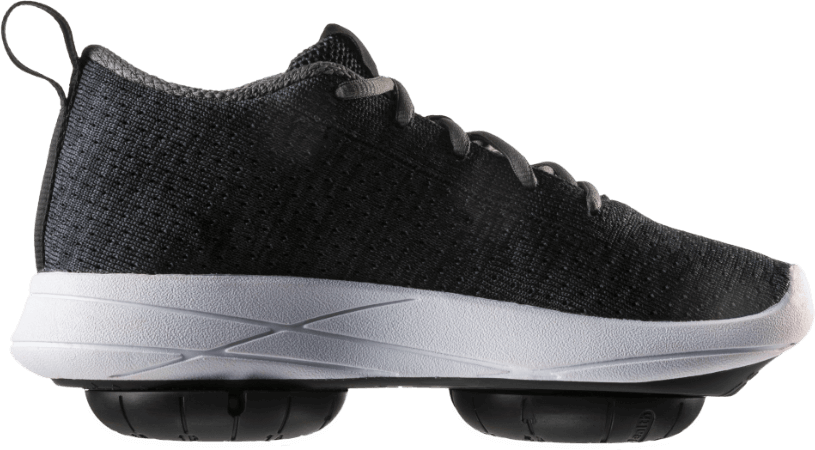
8. Apos® uses redistribution and re-education
Apos® is a personalised, non-invasive medical device designed to help people with knee, hip and lower back pain move more comfortably.
It works through two key principles:
Redistribution: The device is calibrated to help shift weight away from painful or overloaded areas.
Re-education: Small changes in the way you walk provide feedback to your body, helping retrain movement patterns over time.
This approach is known as gait retraining. The device is personalised according to your individual walking pattern and clinical needs. Patients typically wear Apos® at home for around one hour a day while continuing with their normal routine.
The goal is not simply to make walking feel easier while the device is being worn. Repeated use is designed to help your body learn more supportive movement patterns, with potential benefits beyond that hour.
9. Apos® is a NICE-recommended option for a specific group of patients
Apos® is not a first-line treatment for every person with knee pain. Its use is recommended by NICE for adults with knee osteoarthritis when specific criteria are met.
According to NICE HealthTech guidance HTG671:
- Non-surgical standard care has not worked well enough
- The person’s condition meets referral criteria for total knee replacement
- The person does not want surgery
- Relevant data is collected about quality of life, healthcare use and any future knee replacement
This means Apos® may be considered as an alternative to knee replacement surgery for eligible people who have tried standard non-surgical care and would prefer to avoid surgery.
NICE describes AposHealth® as a cost-saving option within this specific group. The guidance also recommends further research for people who cannot safely have surgery or who do not yet meet referral criteria.
Eligibility must be determined through an individual clinical assessment.
10. Your next step should be personal, practical and low-pressure
There is no single best treatment for everyone with knee pain. The most suitable plan depends on your diagnosis, symptoms, previous treatments and goals.
If you have tried exercise, medication or other standard care without enough improvement, it may be worth asking whether a personalised gait assessment is appropriate for you.
An Apos® assessment can help you understand:
- Whether your symptoms may be suitable for Apos®
- How your walking pattern may be affecting your pain
- How the device could be personalised for you
- Whether treatment may be available through the NHS, insurance or privately
- What you can realistically expect from treatment
A brief conversation with an Apos® expert is a simple way to learn more. It does not commit you to treatment.
Find your route to relief
The right non-surgical knee pain relief plan can help you move with more confidence, protect your independence and return to the things you enjoy.
If standard care has not helped enough, schedule a brief assessment with the AposHealth® team to find out whether Apos® could be right for you.
Learn how Apos® works or find out more about access through the NHS.
Take the first step towards moving more comfortably.