
56% vs 26%
pain reduction with Apos® vs traditional physical therapy
Reported in a randomised controlled trial for chronic lower back pain.
Evidence-led care
Apos® is a personalised, non-invasive, CE-marked medical device treatment clinically proven to reduce knee, hip and chronic lower back pain. It is recommended in NICE guidance for knee osteoarthritis.
Biomechanics in practice
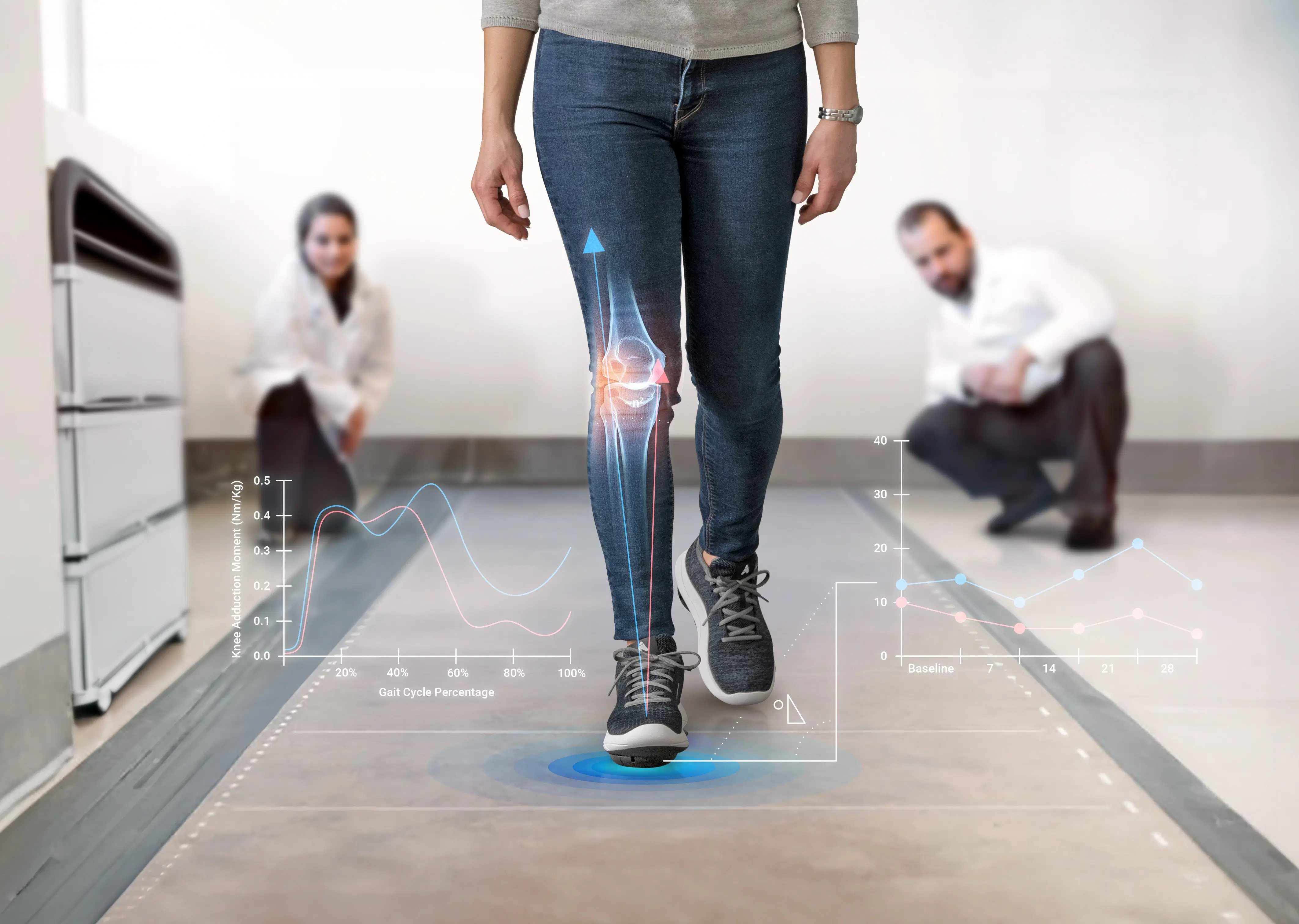
Most musculoskeletal conditions are driven by 2 key, modifiable factors; joint load, and how muscles can control these forces.
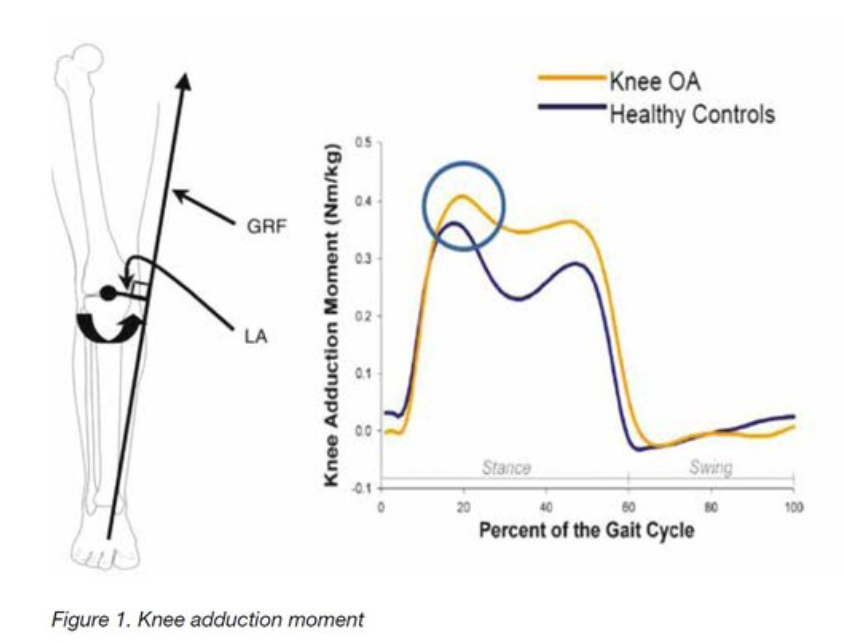
As an example, the knee adduction moment is a well-established biomechanical marker related to knee osteoarthritis. Apos® redistributes loads by precisely controlling the foot’s centre of pressure, and thereby the forces acting on the joints and how muscles are working. Its convex pods also create controlled instability that stimulates neuromuscular retraining, helping improve muscle activation and walking control over time. Together, these mechanisms aim to reduce excessive forces while the device is worn and support more efficient movement beyond the time it is worn.
NICE guidance · HTG671
NICE recommends AposHealth® for people with knee osteoarthritis. A high-quality randomised controlled trial showed improvements in pain, stiffness and function compared with a sham device.
NICE's independent External Assessment Group reviewed the clinical evidence base for AposHealth®.
What was reviewed
29
publications reviewed
19
unique studies
3,767
participants included
Key outcomes
Published clinical, real-world and claims data show where Apos® can make a measurable difference.
56% vs 26%
Reported in a randomised controlled trial for chronic lower back pain.
84–89%
Reported across follow-up lasting two to six years.
Source: Greene et al. (2022); Benn et al. (2023)
43%
A payer claims analysis found lower overall healthcare costs after treatment.
NICE evidence & economics
The NICE Resource Impact Template models the impact of providing Apos® to 100 people over five years compared with standard care. This is a modelled cohort, not a limit on the potential benefit: applying the pathway across a wider NHS population could deliver substantially greater impact.
£498,270
NICE modelled net saving for a cohort of 100 people over five years.
49 fewer
NICE modelled 49 fewer knee operations for 100 people over five years.
24 lists
NICE modelled capacity equivalent to 24 four-hour theatre lists for 100 people over five years.
£247,350
NICE modelled cash saving in year one for a cohort of 100 people over five years.
These modelled savings are based on just 100 patients. They represent a small cohort; the potential impact is much greater when the pathway is adopted across the wider NHS population.
Source: NICE resource impact and evidence, which opens in a new tab.
Publications & resources
Read the full articles and NICE guidance behind the headline findings.
NICE · Evidence review
Global Spine Journal · 2025 · Full article
Retrospective claims analysis · Journal of Health Economics and Outcomes Research
JHEOR · Real-world claims-based economic analysis